



Science & Longevity
Updated April 2026 · 14 min read
Have you ever wondered why your energy levels naturally dip as you get older, or why recovery takes longer than it did in your twenties? If you are over 40 and experiencing unexplained fatigue, brain fog, or slower metabolism, the answer likely lies deep within your cells — specifically in a vital molecule called Nicotinamide Adenine Dinucleotide (NAD+). While aging is a complex process, scientists have identified the decline of NAD+ as one of the primary drivers of cellular aging and metabolic dysfunction.[1]
From the simplest single-celled organisms to humans, life cannot exist without NAD+. It acts as the cellular currency for energy production and serves as a critical signaling molecule for DNA repair and longevity pathways. However, our supply of NAD+ is not infinite. As we age, the delicate balance between NAD+ production and consumption becomes disrupted, leading to a significant drop in its availability.
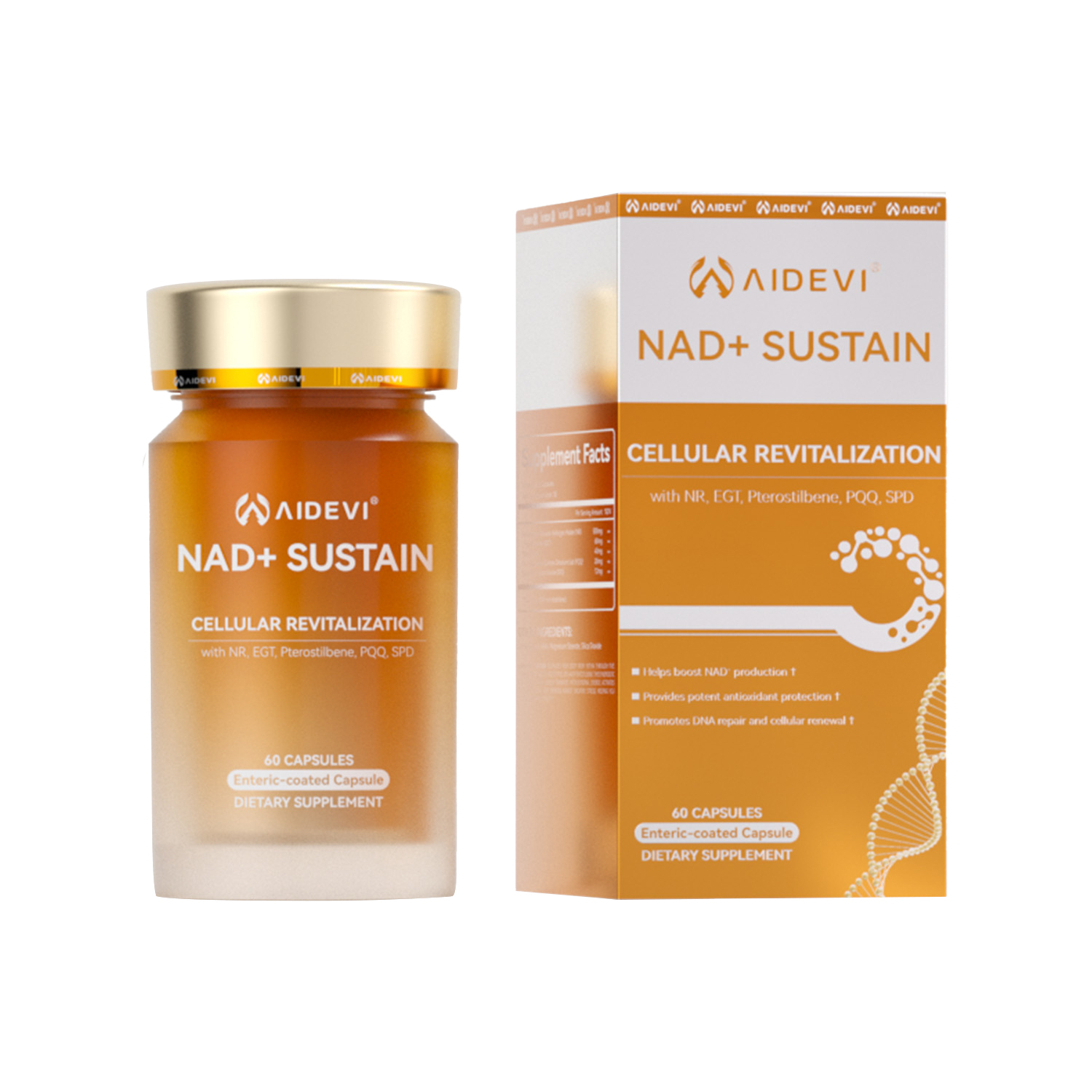
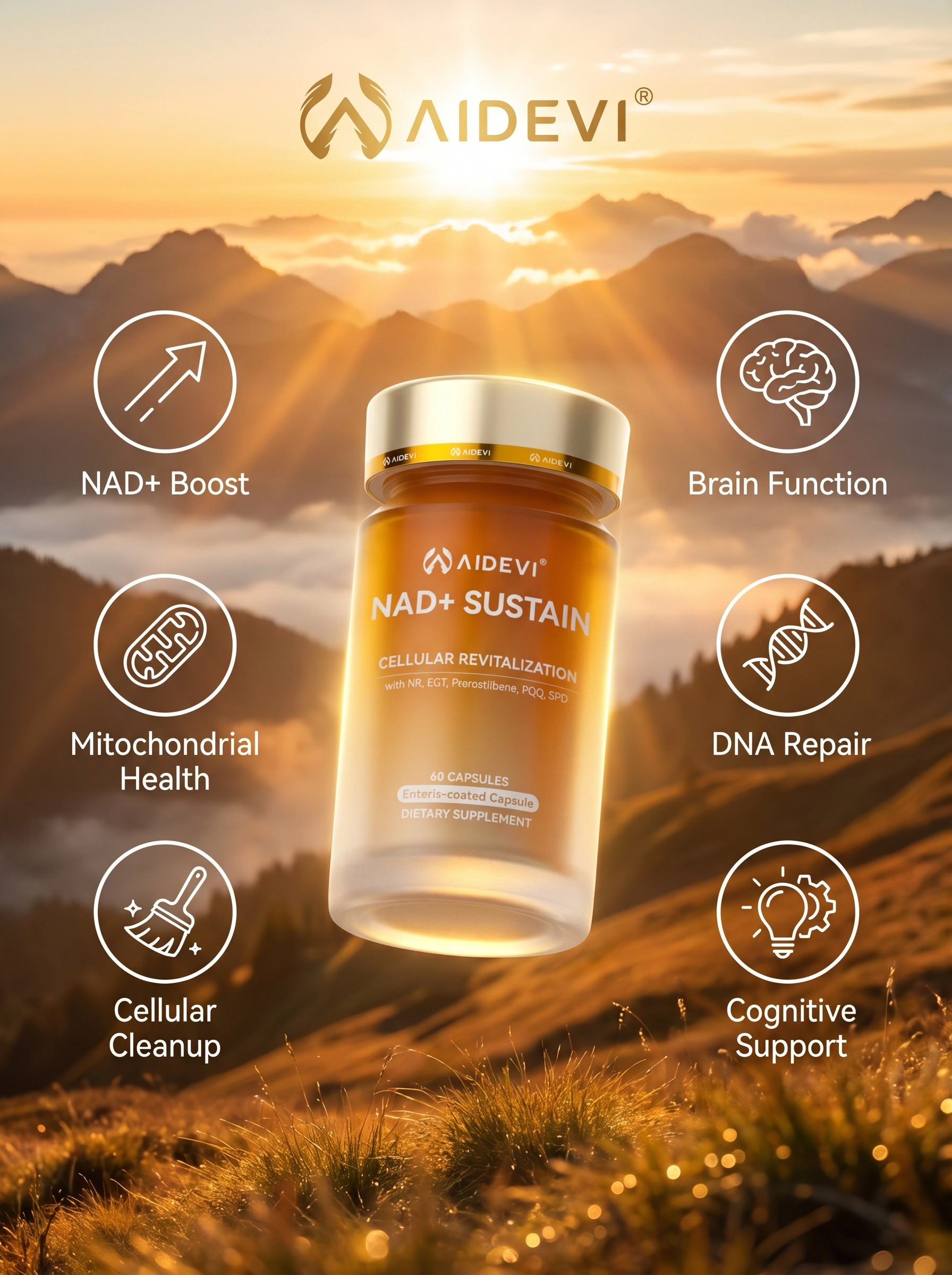
This comprehensive guide explores the biological mechanisms behind why NAD+ declines with age. We will dive into the roles of sirtuins, PARP enzymes, and DNA repair, uncovering the "vicious cycle" that accelerates aging, and discuss scientifically proven ways to restore your cellular energy — including advanced synergistic supplements like AIDEVI NAD+ SUSTAIN.
What Is NAD+ and Why Does It Matter?
Nicotinamide Adenine Dinucleotide (NAD+) is a coenzyme found in every living cell. It exists in two primary forms: NAD+ (the oxidized form) and NADH (the reduced form). The continuous cycle between these two forms is what allows our cells to generate the energy required for survival. If you want to dive deeper into this specific process, you can read our detailed explanation of the NAD+ to NADH cycle.
Beyond energy production, NAD+ serves a second, equally important function: it acts as a substrate (or fuel) for crucial enzymes that regulate cellular health, stress resistance, and longevity. Unlike its role in energy transfer — where it is constantly recycled — NAD+ is entirely consumed when used by these regulatory enzymes. This means our bodies must constantly synthesize new NAD+ to keep up with the demand.
How Much Does NAD+ Actually Decline With Age?
The decline of NAD+ is not a sudden event but a gradual, progressive depletion that begins in our thirties and accelerates as we enter our fifties and beyond. Research indicates that NAD+ levels can drop by as much as 40% to 50% between the ages of 20 and 50.[2]
This reduction is not uniform across the body; different tissues experience varying rates of decline. Studies examining human liver samples have shown that individuals over the age of 60 exhibit an approximately 30% decline in NAD+ concentration compared to younger individuals.[3] In some extreme cases, researchers have observed up to an 80% to 90% reduction between young adults and the elderly.[4]

| Age Group | Estimated NAD+ Level | Cellular Impact |
|---|---|---|
| 20s – 30s | 100% (Peak Baseline) | Optimal energy production, efficient DNA repair, high sirtuin activity. |
| 40s – 50s | ~50% – 70% of Baseline | Decreased metabolic efficiency, slower recovery, early signs of aging. |
| 60s – 70s | ~30% – 50% of Baseline | Increased cellular senescence, compromised DNA repair, higher disease risk. |
| 80s+ | ~10% – 20% of Baseline | Severe metabolic dysfunction, chronic inflammation, significant cellular resilience decline. |
The cost of this decline is severe. A shortage of NAD+ impairs mitochondrial function, reduces the body's ability to repair damaged DNA, and leaves cells vulnerable to oxidative stress. To understand how to intervene, we must first understand the three primary mechanisms driving this depletion.
The Three Main Reasons NAD+ Declines With Age
The available pool of NAD+ in a cell is governed by a simple equation: generation versus consumption. During youth, our bodies efficiently produce enough NAD+ to meet cellular demands. However, as we age, biosynthesis slows down while consumption skyrockets. This imbalance is driven by three key factors.
Reason 1 — NAMPT Decline: The Biosynthesis Bottleneck
The primary way mammalian cells produce NAD+ is through the salvage pathway, which recycles nicotinamide (NAM) back into NAD+. The rate-limiting enzyme in this process is Nicotinamide Phosphoribosyltransferase (NAMPT). Think of NAMPT as the bottleneck in a factory assembly line — no matter how many raw materials you have, production can only move as fast as this specific enzyme allows. Research has demonstrated that NAMPT expression and activity decline significantly with age in various tissues, including skeletal muscle, adipose tissue, and the brain.[5] This age-dependent decrease in NAMPT means that even if you consume a healthy diet, your body's internal machinery becomes less efficient at manufacturing and recycling NAD+.
Reason 2 — PARP Hyperactivation: DNA Damage Drains the Tank
Poly (ADP-ribose) polymerases (PARPs) are a family of enzymes responsible for detecting and repairing DNA damage. Among them, PARP1 is the most active, accounting for the vast majority of cellular PARP activity. When our DNA is damaged by UV radiation, pollution, or internal oxidative stress, PARP1 rushes to the site to initiate repairs — consuming massive amounts of NAD+ in the process. Aging is associated with a chronic accumulation of DNA damage, leading to the chronic hyperactivation of PARP1.[6] This is why supplementing with highly bioavailable precursors like Nicotinamide Riboside (NR) is critical to replenish the NAD+ pool drained by PARP activity.
Reason 3 — CD38 Overexpression: The Silent NAD+ Thief
CD38 is another major NAD+-consuming enzyme that plays a role in calcium signaling and immune response. Unlike PARP1, which responds to DNA damage, CD38 is primarily activated by inflammation. As we age, our bodies often enter a state of chronic, low-grade inflammation ("inflammaging"), partly driven by the accumulation of senescent cells. Research has revealed that CD38 protein levels increase significantly in multiple tissues over time, making it a primary culprit in age-related NAD+ decline.[8] In fact, CD38 is so voracious that it can consume up to 100 molecules of NAD+ just to generate a single signaling molecule.

Sirtuins: The Longevity Enzymes That Suffer Most
The decline of NAD+ would not be as catastrophic if it weren't for the fact that sirtuins — a family of seven proteins (SIRT1–SIRT7) known as the "longevity genes" — are entirely dependent on NAD+ to function. Sirtuins are responsible for regulating cellular health, metabolism, stress resistance, and circadian rhythms.
What Sirtuins Do (and Why They Need NAD+)
Sirtuins act as cellular guardians. They remove acetyl groups from other proteins, a process that activates or deactivates specific cellular functions. For example, SIRT1 (located in the nucleus) regulates gene expression and metabolism, while SIRT3 (located in the mitochondria) manages energy production and defends against oxidative stress. SIRT6 is heavily involved in DNA repair and genome stability. However, sirtuins can only perform these critical tasks when NAD+ is present — they are NAD+-dependent deacetylases. When NAD+ levels drop, sirtuin activity plummets, leaving cells vulnerable to metabolic dysfunction and accelerated aging.[9]
Regulates gene expression, metabolism, and stress response. Linked to lifespan extension in animal models.
Manages energy production and defends against oxidative stress. Protects mitochondrial function.
Heavily involved in DNA repair and genome stability. Mice overexpressing SIRT6 show lifespan extension.

The PARP vs. Sirtuin Competition for NAD+
Because PARP1, CD38, and sirtuins all rely on the same intracellular pool of NAD+, they are in constant competition. In a young, healthy cell, there is enough NAD+ to go around. But as we age, the balance shifts dramatically. When DNA damage accumulates, PARP1 becomes hyperactivated, consuming vast amounts of NAD+. Simultaneously, age-related inflammation drives up CD38 expression, further draining the NAD+ supply. This leaves sirtuins starved of their essential fuel.
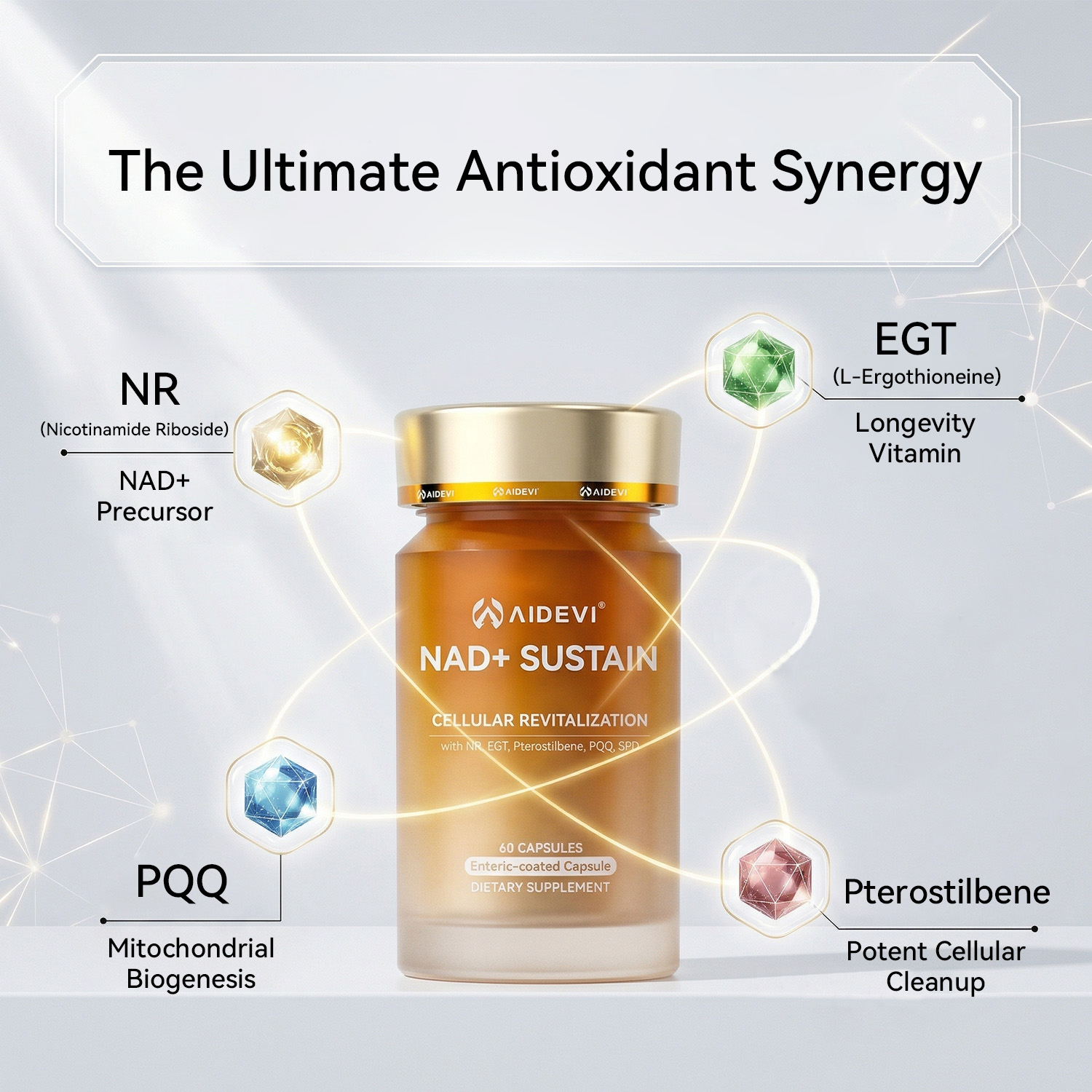
This is why advanced longevity supplements often combine NAD+ precursors with sirtuin activators like Pterostilbene. Pterostilbene works synergistically with NAD+ to activate sirtuins, promoting DNA repair while providing robust anti-inflammatory and antioxidant protection.
Key Insight: Without sufficient NAD+, sirtuins cannot properly regulate metabolism, repair DNA, or protect mitochondria. This creates a dangerous feedback loop where the loss of sirtuin activity exacerbates the very DNA damage and inflammation that caused the NAD+ depletion in the first place.
The Vicious Cycle: How NAD+ Decline Accelerates Itself
The interaction between DNA damage, PARP activation, CD38 overexpression, and sirtuin deactivation creates a self-perpetuating downward spiral. Breaking this cycle is the primary goal of modern longevity research. By restoring NAD+ levels, scientists believe we can reactivate sirtuins, improve DNA repair, and slow the aging process.
DNA Damage & Oxidative Stress
Environmental factors and normal metabolism cause DNA damage and oxidative stress to accumulate over time.
PARP & CD38 Hyperactivation
The body responds by activating PARP1 to repair DNA and upregulating CD38 due to age-related inflammation.
NAD+ Depletion
Both PARP1 and CD38 consume massive amounts of NAD+, rapidly depleting the cellular pool.
Sirtuin Activity Falls
Starved of NAD+, sirtuins become inactive, impairing their ability to regulate cellular repair and stress resistance.
Accelerated Cellular Aging
Without sirtuin protection, DNA damage and inflammation increase, feeding back into step 1 and accelerating the cycle.

Can You Restore NAD+ Levels? What the Research Says
While the decline of NAD+ is a natural part of aging, it is not entirely inevitable. Research has shown that it is possible to boost NAD+ levels and support cellular health through targeted supplementation and lifestyle interventions.
NR vs nmn: The Most Studied Precursors
Because the NAD+ molecule is too large to easily enter cells directly, scientists have focused on supplementing with NAD+ precursors — smaller molecules that the body can easily convert into NAD+. The two most extensively studied precursors are Nicotinamide Riboside (NR) and Nicotinamide Mononucleotide (NMN).
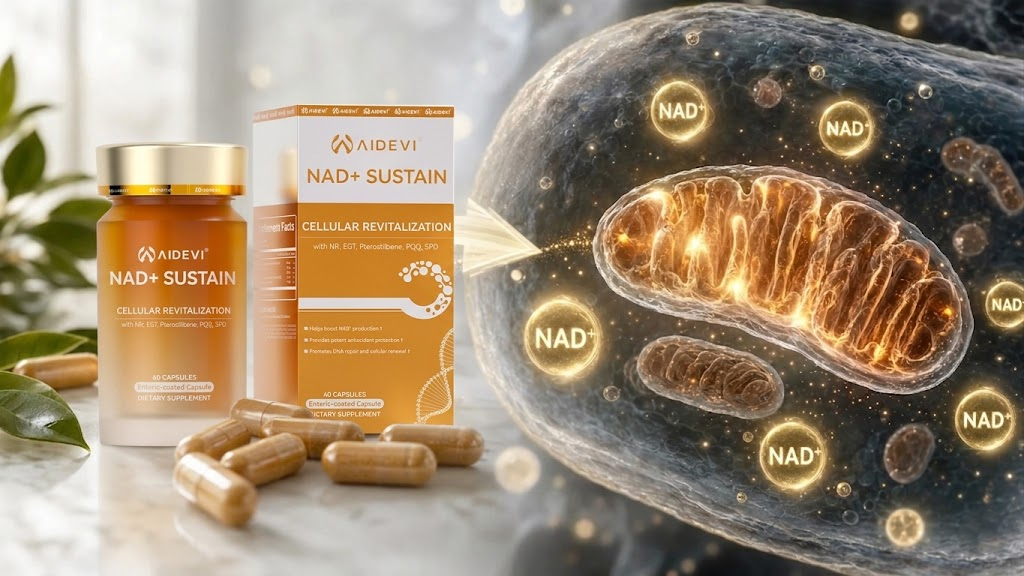
Both precursors are highly effective, but they work slightly differently. NR is a highly efficient precursor that easily crosses cell membranes and is rapidly converted into NAD+ via the NR kinase pathway. A landmark first-in-humans clinical trial published in Nature npj Aging demonstrated that supplementing with a combination of NR and Pterostilbene safely and sustainably increased NAD+ levels in healthy older adults by up to 90%.[10]
Lifestyle Factors That Support NAD+ Production
In addition to supplementation, certain lifestyle choices can naturally support NAD+ levels and sirtuin activity.
Exercise
Regular physical activity, particularly HIIT and aerobic exercise, has been shown to increase NAMPT expression, thereby boosting NAD+ biosynthesis.
Caloric Restriction & Fasting
Reducing caloric intake or practicing intermittent fasting activates sirtuins and increases NAD+ levels, mimicking longevity pathways.
Circadian Rhythm Alignment
Maintaining a consistent sleep schedule supports the natural circadian fluctuations of NAMPT and NAD+ production.
Sun Protection
Protecting your skin from excessive UV radiation minimizes DNA damage, reducing the burden on PARP enzymes and preserving NAD+.
Conclusion
The decline of NAD+ with age is a complex biological process driven by decreased biosynthesis (NAMPT decline) and increased consumption (PARP and CD38 hyperactivation). This depletion starves sirtuins of the fuel they need to protect our cells, creating a vicious cycle that accelerates aging, reduces mitochondrial function, and impairs DNA repair.
Understanding why NAD+ declines is the first step toward taking control of your cellular health. By supporting your body's NAD+ production through healthy lifestyle choices and high-quality, synergistic precursors like NR, you can help break the cycle of aging, reactivate your longevity enzymes, and maintain your vitality for years to come.
If you are ready to address the core mechanisms of aging, explore the 5-in-1 synergistic formula of AIDEVI NAD+ SUSTAIN, designed to replenish NAD+, optimize mitochondria, and activate cellular renewal.
Frequently Asked Questions
References
- Imai, S., & Guarente, L. (2014). NAD+ and sirtuins in aging and disease. Trends in Cell Biology, 24(8), 464–471. PMC4112140
- Jinfiniti Precision Medicine. (2024). NAD Levels by Age Group: What's Considered Normal? jinfiniti.com
- McReynolds, M. R., Chellappa, K., & Baur, J. A. (2020). Age-related NAD+ decline. Experimental Gerontology, 134, 110888. PMC7442590
- Peluso, A., et al. (2021). Age-Dependent Decline of NAD+—Universal Truth or Confounded by Comorbidities? Nutrients, 14(1), 101. PMC8747183
- Yoshino, J., Baur, J. A., & Imai, S. I. (2018). NAD+ Intermediates: The Biology and Therapeutic Potential of NMN and NR. Cell Metabolism, 27(3), 513–528.
- Mendelsohn, A. R., & Larrick, J. W. (2017). The NAD+/PARP1/SIRT1 Axis in Aging. Rejuvenation Research, 20(3), 244–248. PubMed 28537485
- Bai, P., et al. (2011). PARP-1 inhibition increases mitochondrial metabolism through SIRT1 activation. Cell Metabolism, 13(4), 469–478.
- Camacho-Pereira, J., et al. (2016). CD38 Dictates Age-Related NAD Decline and Mitochondrial Dysfunction through an SIRT3-Dependent Mechanism. Cell Metabolism, 23(6), 1127–1139. Cell Metabolism
- Bonkowski, M. S., & Sinclair, D. A. (2016). Slowing ageing by design: the rise of NAD+ and sirtuin-activating compounds. Nature Reviews Molecular Cell Biology, 17(11), 679–690. PMC5107309
- Dellinger, R. W., et al. (2017). Repeat dose NRPT (nicotinamide riboside and pterostilbene) increases NAD+ levels in humans safely and sustainably: a randomized, double-blind, placebo-controlled study. npj Aging and Mechanisms of Disease, 3(1), 17. Nature npj Aging
