



Key Takeaways
- NAD+ has a molecular weight of 663 g/mol, making it too large to cross the cell membrane when taken orally.
- NMN (334 g/mol) enters cells via the dedicated Slc12a8 transporter, discovered by Grozio et al. in 2019.
- New 2026 Research: NMN is uniquely converted by gut bacteria into nicotinic acid, acting as a powerful prebiotic while boosting NAD+ via the Preiss-Handler pathway.
- Sublingual and enteric-coated NMN offer superior absorption compared to standard capsules.
- Pairing NMN with TMG (Trimethylglycine) is highly recommended to support the body's methylation cycle.
- Grade 1 NMN at 99.8% purity is the gold standard for maximum bioavailability and safety.
Imagine this scenario: You are a 45-year-old professional who has noticed a steady decline in your daily energy levels. Your morning workouts feel harder, your afternoon focus wanes, and your recovery time has doubled. After researching cellular aging, you discover that declining Nicotinamide Adenine Dinucleotide (NAD+) levels are a primary culprit. Eager to restore your vitality, you search for a solution — only to face a confusing choice: Should you take a direct NAD+ supplement, or should you opt for an NMN (Nicotinamide Mononucleotide) precursor?
While it might seem logical to simply consume the exact molecule your body is missing, cellular biology is rarely that straightforward. The debate between direct NAD+ supplementation and NMN precursors ultimately comes down to one critical scientific concept: bioavailability. In this comprehensive guide, we explore the cellular mechanics of NAD+ absorption, analyze the latest 2026 clinical evidence regarding the gut microbiome, and explain exactly why NMN supplementation consistently outperforms direct oral NAD+ for anti-aging and cellular energy support.
The Core Problem: Why You Cannot Simply "Take NAD+"
To understand why direct NAD+ supplementation is fundamentally limited, we must look at the physical structure of the molecule itself. NAD+ is a massive, complex coenzyme with a molecular weight of 663 g/mol. In the microscopic world of cellular biology, this size presents an insurmountable barrier. The phospholipid bilayer that forms the protective membrane around human cells is highly selective, and the NAD+ molecule is simply too large to pass through this barrier intact.
When you consume a standard NAD+ capsule, the molecule faces a hostile environment in the gastrointestinal tract. Before it can even attempt to enter your bloodstream, digestive enzymes rapidly break down the fragile NAD+ molecule into smaller, less effective components. Even if a fraction of the intact NAD+ manages to reach the bloodstream, it still faces the ultimate hurdle: it cannot cross the cellular membrane to reach the mitochondria, where it is actually needed to produce cellular energy.

Figure 1: The molecular weight of NAD+ (663 g/mol) prevents it from crossing the cell membrane, whereas the smaller NMN molecule efficiently enters the cell via the Slc12a8 transporter protein.
This biological reality means that the oral bioavailability of direct NAD+ supplements is exceptionally poor. While intravenous (IV) NAD+ therapy can bypass the digestive system and deliver the molecule directly into the bloodstream, it remains an expensive, time-consuming, and invasive procedure that is impractical for daily cellular maintenance. A single IV session can cost hundreds of dollars and requires a clinical setting. For sustainable, long-term anti-aging benefits, a more efficient delivery mechanism is required.
How NMN Bypasses the Bioavailability Barrier
If direct NAD+ cannot enter the cell efficiently, how can we effectively raise intracellular NAD+ levels? The scientific consensus points to utilizing direct precursors — smaller molecules that can easily enter the cell and then assemble into NAD+ internally. This is precisely where Nicotinamide Mononucleotide (NMN) demonstrates its superiority.
NMN is a direct, one-step precursor to NAD+. With a significantly smaller molecular weight of 334 g/mol, NMN is structurally designed to navigate the body's absorption pathways. A groundbreaking 2019 study published in Nature Metabolism by Grozio et al. revolutionized our understanding of NMN absorption by identifying a specific transport protein called Slc12a8. This transporter acts as an exclusive cellular doorway, highly expressed in the small intestine, designed specifically to shuttle NMN directly into cells.

Figure 2: The Slc12a8 transporter protein facilitates the rapid and direct absorption of NMN into intestinal cells, where it is immediately converted into NAD+ by NMN adenylyltransferase.
Once NMN passes through the Slc12a8 transporter and enters the cellular cytoplasm, an enzyme called NMN adenylyltransferase (NMNAT) rapidly converts it into the vital NAD+ molecule. This "salvage pathway" is the body's preferred and most efficient method for maintaining NAD+ homeostasis. By providing the exact raw material the cell needs, in a format it can actually absorb, NMN supplementation effectively solves the bioavailability crisis that plagues direct NAD+ products.
The 2026 Breakthrough: NMN and the Gut Microbiome Connection
While the Slc12a8 transporter explains direct cellular uptake, groundbreaking research published in early 2026 has revealed an entirely new dimension to NMN's bioavailability: its profound interaction with the gut microbiome. A landmark study by Christen et al. in Nature Metabolism demonstrated that oral NMN is not just absorbed directly; a significant portion is actively metabolized by gut bacteria.
The researchers discovered that specific gut microbes convert oral NMN into nicotinic acid (NA), a form of vitamin B3. This nicotinic acid then enters the host's bloodstream and is efficiently converted into NAD+ via the Preiss-Handler pathway. This dual-action absorption — direct uptake via Slc12a8 and indirect conversion via the microbiome — explains why NMN is so remarkably effective at raising systemic NAD+ levels.

Figure 3: The dual-pathway of NMN absorption. While some NMN enters cells directly via Slc12a8, gut bacteria also convert NMN into nicotinic acid, which boosts NAD+ through the Preiss-Handler pathway while acting as a powerful prebiotic.
This discovery naturally raises a question: If NMN is converted to nicotinic acid in the gut, why not just take cheap nicotinic acid (niacin) supplements?
The answer lies in NMN's unique prebiotic effect. The 2026 research revealed that NMN specifically promotes the growth of beneficial gut bacteria, such as Enterocloster aldensis. Taking plain nicotinic acid does not provide this microbiome-enhancing benefit. Furthermore, high doses of direct nicotinic acid often cause an uncomfortable "niacin flush" (vasodilation and skin redness), whereas NMN delivers the NAD+-boosting benefits of nicotinic acid without the flushing side effect, while simultaneously improving gut health.
Maximizing Absorption: Sublingual vs. Oral Capsules
Understanding that NMN is highly bioavailable is only half the equation; the delivery method you choose can further optimize how much NMN actually reaches your cells. While standard oral capsules are effective, biohackers and longevity experts often debate the merits of different delivery formats.

Figure 4: Comparing the relative bioavailability of different NMN delivery methods. Sublingual and enteric-coated formats offer distinct advantages over standard capsules.
- Sublingual Delivery (Under the Tongue): Taking NMN powder or lozenges sublingually allows the molecule to be absorbed directly into the rich network of blood vessels under the tongue. This method bypasses the harsh acidic environment of the stomach and the "first-pass" metabolism of the liver, resulting in rapid absorption and a higher peak concentration of NMN in the bloodstream.
- Enteric-Coated Capsules: For those who prefer swallowing a pill, enteric-coated capsules are superior to standard gelatin capsules. The special coating prevents the capsule from dissolving in stomach acid, allowing it to release the NMN intact in the small intestine — exactly where the Slc12a8 transporters and beneficial gut bacteria are located.
- Standard Oral Capsules: While still effective (and certainly better than direct NAD+), standard capsules may lose a portion of their NMN payload to stomach acid degradation before reaching the absorption sites in the intestine.
The Methylation Factor: Why You Should Stack NMN with TMG
As you optimize your NAD+ levels with NMN, it is crucial to understand the downstream metabolic effects. When your cells use NAD+ (for energy production, DNA repair via PARPs, or Sirtuin activation), the NAD+ molecule is broken down into a byproduct called nicotinamide (NAM).
To clear excess NAM from the body, an enzyme called NNMT attaches a "methyl group" to it, creating methylnicotinamide (MeNAM), which is then excreted in the urine. This process is entirely normal, but high-dose, long-term NMN supplementation can place a heavy demand on your body's "methyl pool" — the reserve of methyl groups needed for crucial functions like DNA methylation, neurotransmitter production, and liver detoxification.

Figure 5: The Methylation Cycle. TMG (Trimethylglycine) acts as a methyl donor, replenishing the SAM pool and preventing the depletion of methyl groups caused by the clearance of nicotinamide (NAM).
If your methyl pool becomes depleted, you may experience fatigue, brain fog, or joint aches — symptoms that ironically mimic low NAD+ levels. To prevent this, longevity experts highly recommend stacking NMN with a methyl donor, the most effective being TMG (Trimethylglycine), also known as betaine. Taking TMG alongside NMN ensures your body has an abundant supply of methyl groups to process the increased NAD+ turnover safely and efficiently.
NMN vs. Direct NAD+: A Head-to-Head Comparison
To clearly illustrate the stark differences between these two approaches, the following table summarizes their biological and practical characteristics. This analysis highlights why NMN has become the gold standard for longevity researchers and health-conscious consumers alike.
| Characteristic | NMN (Nicotinamide Mononucleotide) | Direct NAD+ (Oral) |
|---|---|---|
| Molecular Weight | 334 g/mol — Small, readily absorbed | 663 g/mol — Too large for cell membrane |
| Cellular Uptake Mechanism | Direct entry via dedicated Slc12a8 transporter | Must be broken down into precursors first; indirect and inefficient |
| Oral Bioavailability | Excellent — Rapidly absorbed in the gut | Poor — Largely degraded by digestive enzymes |
| Speed of Action | Significant NAD+ elevation within 2 hours | Minimal measurable impact on intracellular levels |
| Human Clinical Evidence | Extensive RCTs confirming efficacy and safety | Limited evidence for oral effectiveness at cellular level |
| Cost-Effectiveness | High value — Affordable daily oral supplementation | IV NAD+ costs –+ per session; oral NAD+ offers poor ROI |
| Sirtuin Activation | Directly supports SIRT1–SIRT7 via intracellular NAD+ production | Indirect and unreliable due to poor cellular delivery |
As the data demonstrates, the debate is not merely theoretical. The physiological barriers preventing direct NAD+ absorption are well-documented in peer-reviewed literature, making NMN the scientifically superior choice for oral supplementation.
The Liposomal NAD+ Exception — And Why It Still Falls Short
In recent years, some supplement manufacturers have attempted to solve the NAD+ bioavailability problem by encapsulating the molecule in liposomes — microscopic lipid bubbles designed to protect the active ingredient from digestive enzymes. While liposomal delivery systems do improve the absorption of NAD+ compared to standard capsules, they still face significant limitations when compared to NMN.
Even if a liposome successfully delivers an intact NAD+ molecule into the bloodstream, the fundamental problem remains: the molecule is still too large to cross the cellular membrane. To enter the cell, the liposomal NAD+ must still be broken down extracellularly into precursors (like NMN or NR), transported across the membrane, and reassembled inside the cell.
This process is biologically inefficient. Why force your body to dismantle a complex molecule only to rebuild it, when you can simply provide the highly bioavailable precursor (NMN) that the cell is already designed to absorb? Furthermore, liposomal NAD+ products are often significantly more expensive than high-quality NMN supplements, offering a lower return on investment for consumers seeking daily cellular support. The bottom line: liposomal NAD+ is a step in the right direction, but NMN remains the more direct and cost-effective solution.
Clinical Evidence: What Human Trials Show About NMN Efficacy
The theoretical superiority of NMN's bioavailability is strongly supported by robust clinical data. In 2020, a landmark clinical trial conducted in Japan by Irie et al. provided the first definitive human evidence that oral NMN supplementation is both safe and highly effective at raising blood NAD+ levels. The study demonstrated that a single oral dose of NMN (ranging from 100mg to 500mg) resulted in a significant elevation of blood NAD+ levels within just two hours of administration, with no serious adverse effects reported.

Figure 6: Clinical trials consistently demonstrate that oral NMN supplementation leads to a rapid and sustained increase in blood NAD+ levels, confirming its superior bioavailability over direct NAD+.
Subsequent research, including the comprehensive Uthever double-blind trial published in Frontiers in Aging (2022), further corroborated these findings. In this 60-day randomized, placebo-controlled study involving 60 healthy adults, participants receiving a daily dose of NMN showed a statistically significant increase in NAD+ levels compared to the placebo group, alongside improvements in physical endurance and overall well-being.
These human trials confirm what cellular biology predicts: NMN is not merely a theoretical precursor; it is a clinically validated mechanism for restoring the NAD+ levels that naturally decline as we age. For a detailed breakdown of the safety profile observed in these studies, please review our article on NMN Safety & Side Effects: Is Long-Term Supplementation Safe?.
What Makes NMN Quality Matter: The 99.8% Purity Standard
While the science overwhelmingly supports NMN over direct NAD+, it is crucial to understand that not all NMN supplements are created equal. The bioavailability and efficacy of NMN are intrinsically linked to its purity. A lower-purity NMN product (below 95%) often contains degradation byproducts, such as nicotinamide (NAM), which can actually inhibit the very Sirtuin enzymes you are trying to activate — counteracting the entire purpose of supplementation.
To maximize cellular absorption and ensure safety, you must seek out Grade 1 NMN, which guarantees a purity level of 99.8% or higher. This exceptional standard ensures that every milligram you consume is active, bioavailable NMN, free from synthetic fillers, heavy metals, or harmful contaminants. The gold standard verification method is High-Performance Liquid Chromatography (HPLC), which provides a precise, quantitative analysis of NMN content and identifies any impurities.
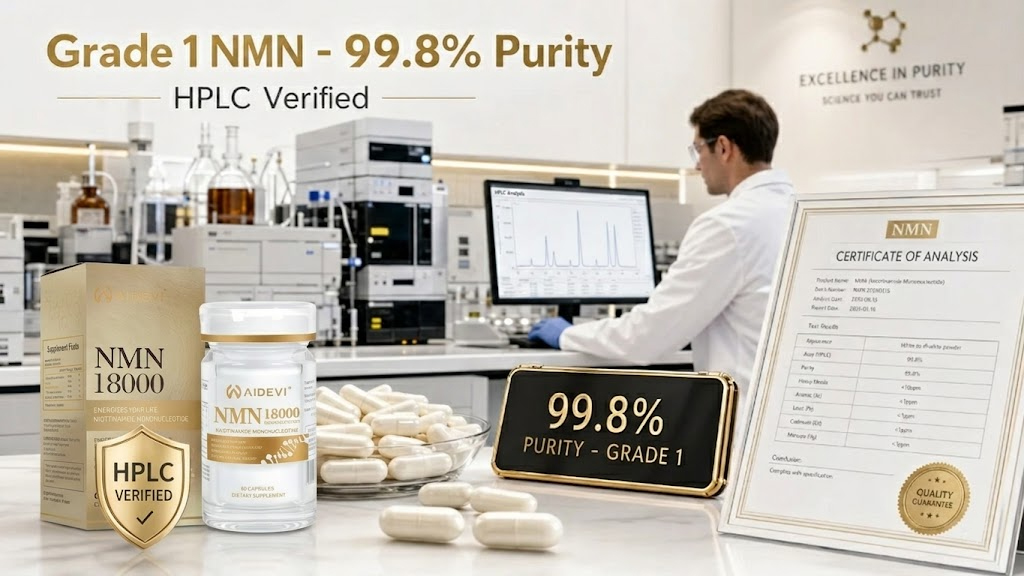
Figure 7: High-Performance Liquid Chromatography (HPLC) is the gold standard for verifying 99.8% Grade 1 NMN purity, ensuring maximum bioavailability and safety in every capsule.
At AIDEVI, our commitment to scientific excellence is reflected in our rigorous quality control. Our NMN products are independently verified by UltraSpec Lab using HPLC and mass spectrometry to confirm their 99.8% Grade 1 purity. Our manufacturing processes adhere to FDA-registered cGMP standards, with comprehensive SGS third-party testing for heavy metals, microbes, and pesticide residues. This uncompromising approach guarantees that our NMN delivers the optimal bioavailability required for true cellular rejuvenation.
Practical Guide: How to Choose the Right NAD+ Booster
Now that the science has established NMN as the superior choice for boosting NAD+ levels, the next step is determining the correct dosage for your specific needs. Clinical research suggests that the effective daily dose of NMN ranges from 250mg to 1250mg, depending on your age, health status, and longevity goals.

Figure 8: As NAD+ levels naturally decline with age, the required dosage of NMN supplementation increases to maintain optimal cellular function and energy production.
The following dosage framework is informed by the clinical literature and is intended as a general starting point. Individual needs may vary, and consulting a healthcare professional is always recommended.
| Age Group | Recommended Daily NMN Dose | Primary Goal |
|---|---|---|
| 30–40 years | 250–500 mg/day | Preventive maintenance, sustained energy |
| 40–55 years | 500–750 mg/day | Active anti-aging, metabolic support |
| 55+ years | 750–1000 mg/day | Comprehensive cellular restoration, longevity |
AIDEVI offers a range of scientifically formulated NMN products designed to meet these varying needs. Our AIDEVI NMN 18000 provides an excellent entry-level dose (approximately 300mg/day) for younger adults beginning their longevity journey, while our advanced AIDEVI NMN 45000 delivers a potent 750mg/day for those seeking maximum cellular support. For a more detailed analysis of dosing strategies, consult our comprehensive NMN Dosage Science Guide.
Conclusion
The debate between direct NAD+ supplementation and NMN precursors is definitively settled by the principles of cellular biology. The massive molecular weight of NAD+ (663 g/mol) renders it incapable of efficiently crossing the cellular membrane, resulting in exceptionally poor oral bioavailability. In stark contrast, the smaller NMN molecule (334 g/mol) utilizes the dedicated Slc12a8 transporter to rapidly enter the cell, where it is efficiently converted into the vital NAD+ coenzyme.
Furthermore, the latest 2026 research highlights NMN's unique interaction with the gut microbiome, providing a dual-pathway absorption mechanism that direct NAD+ simply cannot replicate. By supporting beneficial gut bacteria and converting to nicotinic acid without the flushing side effect, NMN offers a comprehensive approach to cellular health.
By choosing a high-purity, Grade 1 NMN supplement like those offered by AIDEVI, and pairing it with a methyl donor like TMG, you are providing your body with the exact biological precursor it needs to restore youthful NAD+ levels, enhance mitochondrial function, and support long-term cellular health. When it comes to anti-aging science, bioavailability is everything — and NMN is the undisputed champion.
Frequently Asked Questions (People Also Ask)
References
- Grozio, A., Mills, K. F., Yoshino, J., et al. (2019). Slc12a8 is a nicotinamide mononucleotide transporter. Nature Metabolism, 1(1), 47–57.
- Christen, S., et al. (2026). The differential impact of three different NAD+ boosters on the gut microbiome and circulating NAD+ levels. Nature Metabolism.
- Imai, S., & Guarente, L. (2014). NAD+ and sirtuins in aging and disease. Cell Metabolism, 19(3), 433–456.
- Irie, J., Inagaki, E., Fujita, M., et al. (2020). Effect of oral administration of nicotinamide mononucleotide on clinical parameters and nicotinamide metabolite levels in healthy Japanese men. Endocrine Journal, 67(2), 153–160.
- Huang, H. (2022). A Multicentre, Randomized, Double Blind, Parallel Design, Placebo Controlled Study to Evaluate the Efficacy and Safety of Uthever (NMN Supplement). Frontiers in Aging, 3, 851698.
- Covarrubias, A. J., Perrone, R., Grozio, A., & Verdin, E. (2021). NAD+ metabolism and its roles in cellular processes during ageing. Nature Reviews Molecular Cell Biology, 22(2), 119–141.
- Shade, C. (2020). The Science Behind NMN — A Stable, Reliable NAD+ Activator and Anti-Aging Molecule. Integrative Medicine: A Clinician's Journal, 19(1), 12–14.
